Heads-up: Food crisis incoming
Prices will rise, shortages will occur.

The Strait of Hormuz links the Persian Gulf to the Gulf of Oman and the Arabian Sea. It serves as a critical maritime chokepoint for the global agricultural supply chain. Cutting the supply of oil, natural gas, nitrogen, urea and sulfur sets the world up for a food crisis.
Prices will rise, shortages will occur.
In the first half of 2025, the Strait of Hormuz handled 20.9 million barrels per day (mb/d) of oil and petroleum products (U.S. Energy Information Administration). This volume represented 26.2% of total maritime oil trade.
The table below details oil exports traversing the Strait of Hormuz, showing the concentration of export capacity.
| Exporting Nation | Crude Oil & Condensates (mb/d) | Petroleum Products (mb/d) | Total Volume (mb/d) |
Saudi Arabia | 5.43 | 0.80 | 6.23 |
Iraq | 3.32 | 0.31 | 3.63 |
United Arab Emirates | 2.02 | 1.22 | 3.24 |
Iran | 1.69 | 0.72 | 2.41 |
Kuwait | 1.40 | 0.97 | 2.37 |
Qatar | 0.73 | 0.69 | 1.43 |
Bahrain | 0.00 | 0.21 | 0.21 |
Source: IEA analyses based on Kpler tracking (2025).
The Strait carries 20% of the global Liquid Natural Gas (LNG) trade. Qatar sends 93% of its LNG exports through this waterway; the UAE sends 96% (International Energy Agency). Natural gas provides the feedstock for nitrogen-based fertilizers.
The disruption of the Strait imperils the world's fertilizer supply. Qatar, Saudi Arabia, the UAE, Oman, Bahrain, and Iran produce a concentrated share of global agricultural inputs. Before the blockade, the Middle East exported 60 million tonnes of fertilizer precursors annually. The waterway supports 30% of global nitrogen fertilizer exports (International Fertilizer Association).
| Agricultural Commodity | Share of Global Trade Impacted | Primary Regional Exporters | Primary Agricultural Application |
Urea | 34% - 35% | Qatar, Saudi Arabia, Oman, Iran | Nitrogen delivery for cereal crops. |
Ammonia | 23% - 30% | Saudi Arabia, Qatar, Bahrain | Precursor for nitrogenous fertilizers. |
Sulfur | 44% - 50% | UAE, Saudi Arabia, Qatar, Iran | Phosphate extraction and soil amendment. |
Processed Phosphates | 20% - 40% (Indirectly) | Saudi Arabia, UAE, Regional Trade | Root development and energy transfer. |
Source: Kpler and UNCTAD (2026).
The closure of the Strait has stranded millions of tonnes of inputs. Shipping activity through the Strait plunged by 70%, causing price spikes in regional markets. Urea prices in the Middle East and North Africa rose by 20% within 48 hours of initial disruptions (Rabobank). Regional producers must curtail production because vessels cannot arrive to load cargo.
Modern agriculture sustains eight billion people through the application of synthetic fertilizers developed via the Haber-Bosch process. This system is fragile, and 0verpopulation and overconsumption compound the risks. While many expected a crisis triggered by nature, human conflict has provided the spark today.
What do these commodities have to do with putting food on the table?
Farmers consume nitrogen more than any other nutrient. It drives plant growth and protein synthesis. Urea serves as the primary delivery mechanism.
The Haber-Bosch process synthesizes urea using natural gas to extract hydrogen. This combines with atmospheric nitrogen to produce ammonia, which then reacts with carbon dioxide to yield urea. The Middle East scales this production using its natural gas reserves. Qatar's exports alone sustain the caloric needs of 43 million people across the US, Brazil, and India (IFPRI).
Staple grain crops like maize, wheat, and rice consume 45% of nitrogenous fertilizer. These crops provide 40% of global human caloric intake. When farmers reduce nitrogen application, yields decline and the global food supply contracts. Severing commodity exports threatens the caloric foundation of the global population.
Oil and gas refining produces sulfur as a byproduct. The GCC supplies 50% of the world's seaborne sulfur exports. Sulfur affects plant health and fertilizer manufacturing, allowing plants to synthesize amino acids and produce chlorophyll.
| Crop Species | Manifestation of Sulfur Deficiency Symptoms |
Banana | Young leaves exhibit chlorosis; small fruits. |
Green Gram (Mungbean) | Stunted growth; reduced flowering; shrunken seeds. |
Cotton | Yellowing of new leaves; reddening of the petiole. |
Potato | Inward curling of leaves; yellowing of stems. |
Tobacco | Pale-yellow green leaves; shortened internodes. |
Sulfur also improves fertilizer efficiency. Manufacturers coat urea pellets with sulfur to create slow-release fertilizers, improving Nitrogen Use Efficiency and prevents nitrogen loss.
Furthermore, the phosphate industry requires sulfur. Workers convert sulfur into sulfuric acid to dissolve phosphate rock. Morocco holds 70% of the world's phosphate reserves but imports 90.5% of its sulfur from Kazakhstan, the UAE, and Saudi Arabia (OEC/GTAIC). The blockade starves the Moroccan industry of sulfuric acid, threatening the supply of two macronutrients.
The Weaponization of Water
Missile and drone strikes against desalination plants also threaten water production capacity. Over 400 plants along the Persian Gulf account for 46% of global desalination capacity.
Kuwait relies on desalination for 90% of its drinking water, Oman 86%, and Saudi Arabia 75%. Attacks on this infrastructure trigger national crises. Beyond the humanitarian impact, the destruction causes industrial failure.
Middle Eastern refineries and fertilizer complexes consume vast volumes of water. Ammonia production requires 6 cubic meters of water per tonne for steam methane reforming while industrial operations also consume a significant portion of the region's desalinated water. Damage to desalination plants forces the shutdown of export facilities. Rebuilding reverse-osmosis membranes and restoring pipeline networks takes years.
Impacts to Global Agriculture
The loss of logistics and production triggers a repricing of inputs globally. Because the fertilizer market is integrated, disruptions in the Middle East affect global prices. Nations that do not import from the GCC still face price surges as demand outbids the remaining supply.
Agricultural producers face margin compression, with costs for fertilizer, fuel, and labor rising faster than revenue. Financial survival now dictates decisions. Farmers dedicate a larger share of yields to pay for inputs, increasing risk, and producers often cut phosphate applications first, which degrades soil health.
Farmers respond to nitrogen shocks by acreage shifting. Corn and wheat become too expensive to cultivate so producers in the US and South America pivot to soybeans. Soybeans fix nitrogen from the atmosphere and require less fertilizer. This decision reduces the global supply of grains.
A reduction in corn acreage spikes animal feed costs, so livestock producers liquidate herds by taking animals to market early. This causes a temporary supply glut followed by a multi-year deficit of breeding stock. The shortage eventually drives retail meat and dairy prices to record highs.
The MENA region imports 89% of its corn and 77% of its rice. Closed routes and unavailable fertilizer create a famine risk. This sparks instability and forces nations to divert budgets to food subsidies (World Economic Forum).
Expect a Delay
Retail grocery prices do not reflect wholesale fertilizer spikes immediately. Models show that shocks to commodity prices peak at the retail level 12 months after the disruption.
Retailers secure inventories six to nine months before sale and current crops use chemicals purchased before the conflict. Crops take months to mature and the livestock cycle spans months or years. Inflationary pressure takes a while to migrate through this timeline. Retailers also avoid rapid price changes to protect brand loyalty and may absorb costs or use shrinkflation before passing costs to consumers.
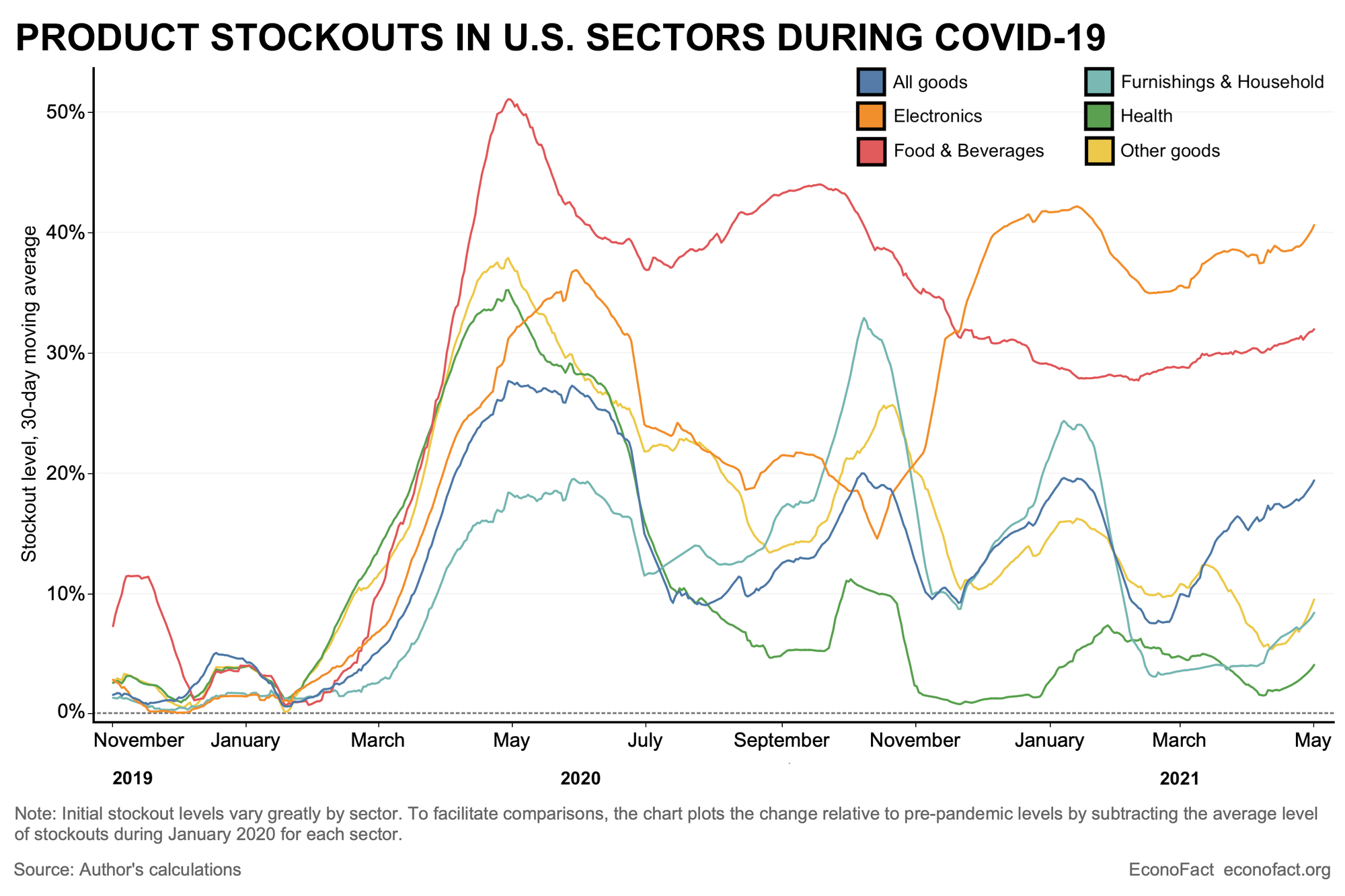
Like we saw after the initial Covid shock, eventually higher costs are passed on to consumers. Prices will rise, and shortages will occur.
Dear reader, the coming food crisis requires immediate action:
1. Change your diet: Shift toward plant-based proteins like lentils, beans, and chickpeas. Legumes fix nitrogen and require less synthetic urea. Also, this cheap source of protein (especially dried beans) reduces exposure to price volatility.
2. Start your stockpile now: Buy shelf-stable commodities before retail prices adjust. Focus on rice, oats, pasta, and dried beans.
3. Grow and preserve fresh foods: Start plants indoors this spring (in the northern hemisphere). Research what grows in your area and begin seed starting this weekend. Learn to can fresh food to preserve what you grow or supermarket deals.
Thank you for reading.
My name is Sarah and I examine existential civilizational risks. It is a passion project to explore humanity's frightening future - a topic traditional media ignores.
The site is free for all, as I believe this information shouldn't be locked behind a paywall. I also don't accept corporate advertising to maintain editorial honesty.
To fund this site, I depend on the kindness of strangers. Paid subscribers and one-time contributors to help me cover hosting and production costs.