James Hansen: A "Super" Record is Coming in 2027
The Acceleration is Real: We’ve Hit +1.5°C and 2027 is Set to Explode
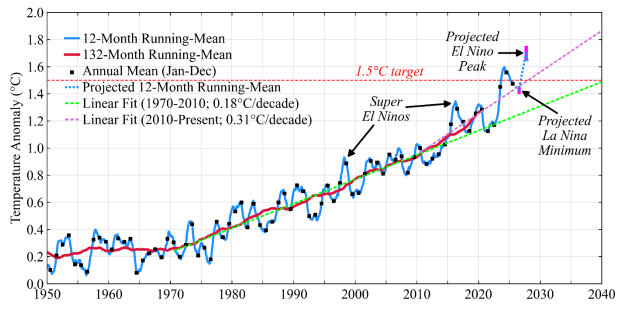
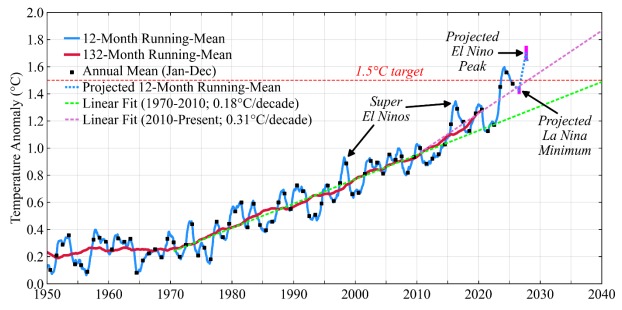
"We project a global temperature record of +1.7C in 2027, which will provide further confirmation of the recent global warming acceleration."
The "father of climate change awareness" is sounding the alarm again. James Hansen, the former NASA scientist who famously testified to Congress about the greenhouse effect in 1988, has released a chilling new update alongside colleagues Pushker Kharecha, Dylan Morgan, and Jasen Vest.
Their latest report, dated December 18, 2025, reveals that we have hit dangerous thresholds for humanity.
Here is what you need to know:
- The 1.5°C Barrier Has Been Breached: The average global temperature for the three-year period of 2023–2025 has reached +1.5 C relative to the 1880–1920 base period.
- 2025 is the Second Hottest Year on Record: While slightly cooler than the freakishly hot 2024, 2025 clocked in at +1.47 C.
- A "Super" Record is Coming in 2027: Hansen and his team project that 2027 will shatter records, reaching a staggering +1.7 C global temperature anomaly.
- Warming has Nearly Doubled in Speed: Since 2010, the rate of global warming has accelerated to 0.31C per decade, compared to just 0.18C per decade between 1970 and 2010.
- The "Aerosol Shift": The unexpected surge in heat is partially due to the loss of the "cooling effect" from human-made aerosols, which have recently shifted from masking warming to potentially accelerating it.
While the team expects a brief dip in temperatures in early 2026 as the current La Nina phase concludes, it is merely the "calm" before the next heat storm. Models indicate a new El Nino will begin in the second half of 2026, acting as a slingshot to propel 2027 into uncharted, record-breaking territory.
Read the full report:
Collapse2050 is a personal project to deliver unadulterated information and a space for honest communication about humanity's final period. If you'd like to support my work, please subscribe or make a one time contribution.
Thank you,
Sarah


