Yes, the President Could Actually End Civilization and Nobody Could Stop It
"A whole civilisation will die tonight, never to be brought back again."
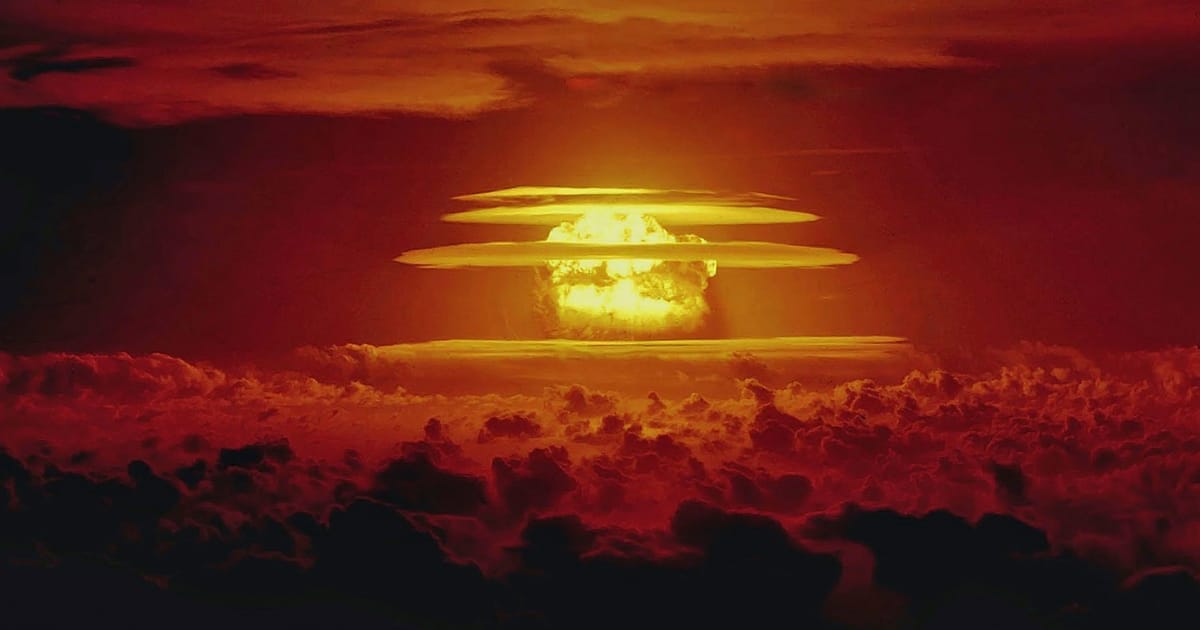
If you ask the average person if a single, unhinged president can just decide to end the world, they'll probably say no. They figure there must be some failsafes or checks in place, right? Well, hate to break it to you, but they're totally wrong!
The one person who holds the ultimate power to launch thousands of nukes actually said this recently:
“A whole civilisation will die tonight, never to be brought back again. I don’t want that to happen, but it probably will.” - President Trump, April 7, 2026.
He basically warned that an entire civilization would be wiped out if Iran didn't back down. He wasn't talking about small, targeted strikes—he explicitly talked about hitting civilian infrastructure like bridges and power plants.
It's crazy to think about, but one of the few people on Earth who can actually end all life just threatened to do it! I really don't think most of us grasp just how much destructive power the US President actually has. Sure, he eventually agreed to a ceasefire and delayed Armageddon, and we all breathed a massive sigh of relief. Maybe he never actually planned to destroy Iran's civilization. But honestly, that’s missing the point! Just having that power and throwing around those threats is terrifying enough. It’s a huge wake-up call for all of us when we head to the voting booth.
Really, the number one question we should ask when picking a president is: "Do I trust this person with the nuclear codes?"
Here's the scary truth: in the US, the President has absolute, unchecked power to order a nuclear strike. He doesn't need to ask Congress, the military, or his cabinet for permission. If an unstable leader decides it's time to push the button, the system is designed to just obey. No questions asked. Basically, the only thing keeping us safe from a nuclear holocaust is the President's mental stability. Making threats about wiping out civilizations is just totally unacceptable! A lot of experts pointed out that this kind of talk sounded a whole lot like a threat to use nukes first.
A lot of us assume there are legal checks or that the military can just say "no." That's a super dangerous myth. The whole American nuclear setup is built for speed, not for debate. The engineers built it so that orders are carried out instantly. Period.
How Does a Launch Even Happen?
The US nuclear launch process is a highly rehearsed routine that goes from the first warning to missiles in the air in just a few minutes. It has to be fast because of sheer physics. A missile launched from Russia hits the US in about 30 minutes, and submarine missiles fired off the coast could strike Washington D.C. in under 15 minutes. During the Cold War, the US feared a "decapitation strike" from the Soviets that would wipe out Washington before anyone could react. With a window that tight, the system has to prioritize rapid action over everything else.
It all starts with sensors. NORAD (the North American Aerospace Defense Command) keeps a close eye on early-warning satellites. These satellites look for the intense heat of a missile launch. If they spot something, ground radars double-check it and track exactly where the warheads are heading.
If NORAD confirms an attack is real, they immediately alert the President. The military pulls the President, the Secretary of Defense, top generals, and intelligence folks into a secure emergency call.
They give the President a quick briefing. Because of how fast missiles fly, the President only has about seven to ten minutes to decide what to do!
To make that choice, there's always a military aide sticking close to the President, carrying a briefcase known as the "nuclear football." Inside is a secure communication system and a black book full of strike options, ranging from small tactical hits to an all-out nuclear response.
If the President decides to go ahead with a strike, he has to prove he's actually the President. This makes sure a bad actor isn't faking the order. He uses a little plastic card called the "biscuit," which has daily secret codes known as "Gold Codes."
The President reads a code off the biscuit to an officer at the National Military Command Center (NMCC) to verify his identity. Once they confirm it's him, his verbal order officially becomes a legally binding command.
Next, the NMCC turns that order into an encrypted message called an Emergency Action Message (EAM). This message has all the details: the targets, how many warheads to use, and the launch codes. They broadcast this message everywhere at once to make sure it gets through.
Deep underground or out on submarines, combat crews get the message. Alarms go off, and the crews quickly check to make sure the order is legit. The commanders crack open a red safe to get their own secret codes and match them up with the ones in the message. If they match, it's a go!
At this stage, the military uses a "two-person rule," meaning no single person down the chain can launch a nuke on their own. Down in the missile silos, two officers have to insert their keys and turn them at the exact same time.
It only takes about 60 seconds for an ICBM crew to launch their missiles, and submarines can fire theirs in about 12 minutes. And once those missiles are in the air? That's it. They can't be recalled or redirected, and there's no self-destruct button.
The Big Myth: Vetoes and "Stop" Buttons
You might think someone like the Secretary of Defense or Congress has to approve a nuclear strike. Nope! The President is the absolute only one who gets to make that call.
The Secretary of Defense is just there to help verify the order is real, but he can't legally stop it. If he tried to say no, the military is actually supposed to bypass him and send the launch commands anyway. Nobody in the cabinet can overrule the Commander-in-Chief.
The 25th Amendment lets the cabinet remove a president, sure, but that process takes hours or even days. A nuclear launch takes less than 15 minutes, so that's pretty much useless in an emergency.
And what about Congress? They have the power to declare war, but nuclear weapons are a whole different ballgame. The executive branch basically argues that nuclear deterrence is too important to wait for a legislative vote, so the President's authority stays absolute.
Will the Military Actually Follow Orders?
Military personnel are only supposed to follow lawful orders under the rules of war.
Using military force has to be necessary and proportional. Shooting back if we're attacked is one thing, but launching an unprovoked first nuclear strike targeting civilian populations is a violation of international law and the military's own manuals.
On April 7, 2026, the President threatened to wipe out Iran’s whole civilization. Indisputably, this would have been genocide. If the President followed through on this threat, military commanders are supposed to refuse illegal orders, but they're also trained their whole careers to follow the chain of command. Refusing the President is literally mutiny. So, hoping that generals will just say "no" in the heat of a global crisis isn't exactly a great backup plan. It's the same deal if a president randomly ordered an invasion of Greenland or Canada.
The Lone Heroes Who Stepped Up
Sometimes, when the system doesn't have any built-in safety nets, people just have to invent their own.
Back in 1973, an Air Force Major named Harold Hering simply asked how he could know if a launch order was coming from a sane president. What happened? The Air Force pulled him from training and kicked him out. The military really doesn't like it when officers question the boss's mental fitness.
But top leaders worry about this stuff, too! During the Watergate scandal, Defense Secretary James Schlesinger was so worried about President Nixon's behavior that he secretly told the military to run any emergency launch orders past him first. He didn't actually have the legal authority to do that, but he did it anyway.
General Mark Milley did something similar in early 2021 because he was worried the President might go rogue. He made sure he was looped into any launch procedures and even called China to promise the US wasn't going to pull a surprise attack. Again, he didn't really have the legal right to step in like that. These stories just show that top brass will sometimes break the rules to try and stop an unstable president from starting a nuclear war. It's honestly a toss-up if these moves would actually work in real life.
Vasily Arkhipov and the Cuban Missile Crisis (1962)
A Soviet submarine lost contact with Moscow and thought World War III had started. The captain wanted to fire a nuclear torpedo. Luckily, an officer named Vasily Arkhipov flat-out refused to agree to it and talked the captain down, literally saving the world.
The 3 A.M. Phone Call (1979)
The US early-warning system showed 2,200 Soviet missiles heading for North America. Just as the National Security Advisor was about to wake up the President to recommend a counter-attack, they realized someone had accidentally loaded a training tape into the real computers. Disaster averted.
Stanislav Petrov and the Oko Glitch (1983)
A Soviet satellite system said the US had launched five missiles. An officer named Stanislav Petrov realized that didn't make sense—why would the US only launch five? He logged it as a false alarm, and he was right. The satellite just got confused by sunlight reflecting off some clouds.
The Norwegian Rocket (1995)
Scientists in Norway launched a weather rocket, and Russian radars thought it was a US missile. The Russian nuclear briefcase was even activated, but President Boris Yeltsin decided to wait it out. The rocket landed harmlessly in the sea.
How Do Other Countries Do It?
Other countries handle the decision to launch nukes a bit differently, trying to balance speed with making sure one person doesn't make a terrible mistake.
The UK: The British Prime Minister makes the call, but the Monarch is technically the Commander-in-Chief. The UK also uses "letters of last resort." The PM handwrites letters to submarine commanders telling them what to do if the government is completely wiped out.
Russia: The Russian President has the final say and carries a briefcase called the Cheget. But they also have an automated system called the "Dead Hand." If sensors detect nukes hitting Russia and they lose contact with leaders, the system can automatically launch a counter-attack without human input. Some say this is a myth. I’d rather not find out.
France: Like the US, the French President has total, absolute authority to launch their nukes. They don't share control with anyone, and the President alone decides what to do.
China, India, and Pakistan: These Asian nuclear powers rely on group decisions. They have civilian-led councils or commissions that have to reach a consensus before anyone can authorize a strike. No single person can do it alone.
Who do You Trust with the Fate of the World?
The US nuclear setup is incredibly fast and efficient at processing threats, but it puts all that world-ending power into the hands of just one single human being.
There's no legal way to veto the President if he decides to launch a nuke. The mechanical safety locks only apply to the folks lower down the chain, not the executive branch. It's built for speed, meaning a President could fire off hundreds of weapons in seconds as long as he has the right codes.
While other democracies use group decisions or parliaments to keep things sane, the US relies entirely on one person. That's a huge gamble.
Because the system gives one person this absolute power, elections are incredibly high-stakes. We are literally handing a single human being the ability to destroy the planet. When you head to the voting booth, the absolute most important question you should ask about any candidate is simple: "Can I trust this person with the fate of the entire world?"
When a President openly calls for genocide, I think it’s quite clear he cannot be trusted with the nuclear codes.
My name is Sarah and I examine existential civilizational risks to explore humanity's frightening future - a topic traditional media ignores. The site is free for all, as I believe this information shouldn't be locked behind a paywall. I also don't accept corporate advertising to maintain editorial honesty.
If you'd like to support my effort, paid subscribers and one-time contributors to help me cover hosting and production costs.
Thank you.