Malthus was right
History teems with the ruins of civilizations that believed they were immune to the laws of nature

For two centuries, the acolytes of modernity have treated the Reverend Thomas Robert Malthus as the village idiot of economic theory. High priests of the free market, fortified by the soaring skylines and overflowing food stores of the twenty-first century, routinely brandish his 1798 Essay on the Principle of Population as the ultimate example of failed apocalyptic prophecy.
Malthus, they argue, fatally underestimated the boundless ingenuity of the human mind.
He theorized a grim, inescapable trap: human population grows geometrically, while food production grows arithmetically. Left unchecked, the human population would rapidly exceed the planet’s carrying capacity. To restore balance, the excess human population would then be culled by famine, pestilence, and war.

Yet, food production grew in parallel to the population, and the apocalypse didn't arrive. Modern economic orthodoxy points to the industrial era as the definitive triumph of human cognitive skill over biological constraint. We mastered the market, shattered the Malthusian trap, and claimed permanent dominion over the earth.
Or so we tell ourselves.
A deeper analysis reveals a much darker, far more precarious reality. Thomas Malthus was not wrong; he was merely premature. We did not permanently defeat the iron laws of ecology with our intellectual brilliance. We merely stumbled upon fossil fuels and mistook our staggering inheritance for our own genius.
To understand the profound delusion of the Anthropocene, we must first abandon the fairy tale of continuous, linear human progress. For 290,000 years, humans lived in strict equilibrium to the real-time flow of solar energy. The sun fed the plants; the plants fed the animals. This imposed an unbreakable biophysical ceiling on human ambition.
When agrarian societies invented the heavy plow or engineered complex irrigation, they generated a temporary surplus of calories. With this, they did not engineer wealthier median individuals. Instead, they created more individuals. The swelling population rapidly devoured the surplus, driving the standard of living back to the subsistence floor. For thousands of years, global gross domestic product flatlined. A sixteenth-century European peasant and a Han Dynasty laborer shared similar economic constraints, tethered entirely to the carrying capacity of their local soil.
Then, humanity discovered a massive windfall.
We unearthed hundreds of millions of years of ancient sunlight, captured by primordial forests and compressed into hyper-dense, subterranean sources of energy. By exploiting this discovery, we were no longer bound by the sun and the soil. We grew and built like never before.
We've forgotten our luck. Today, we suffer from a terminal condition systems ecologist Nate Hagens terms "energy blindness." We believe that money drives the economy, forgetting that the fundamental currency of the universe is physical energy.
One single barrel of oil contains the kinetic equivalent of five years of continuous human labor. Today, the global economy devours one hundred billion barrels of oil equivalent annually. We have not abolished the Malthusian trap through cleverness; we have temporarily buried it under the sweat of five hundred billion invisible energy slaves. This phantom workforce, which is embedded in every corner of the economy, has pulled our civilization forward, twenty-four hours a day, without fatigue, complaint, or compensation.
Sociologist William R. Catton Jr. named this phenomenon our "phantom carrying capacity." By using the Haber-Bosch process to synthesize atmospheric nitrogen using natural gas, we decoupled our physical existence from the soil. Food could be grown in excess of the natural composting cycle, with fossil-fuel based fertilizers applied as accelerants. Half the nitrogen in your cellular tissue today originated in a fossil-fueled factory, mirroring the excess population this process enables. Remove the Haber-Bosch process and carrying capacity crashes by at least 4 billion people.
Eight billion of us are burning through ancient fossil fuels to artificially prop up our current numbers, leaving future generations to survive on a plundered planet.
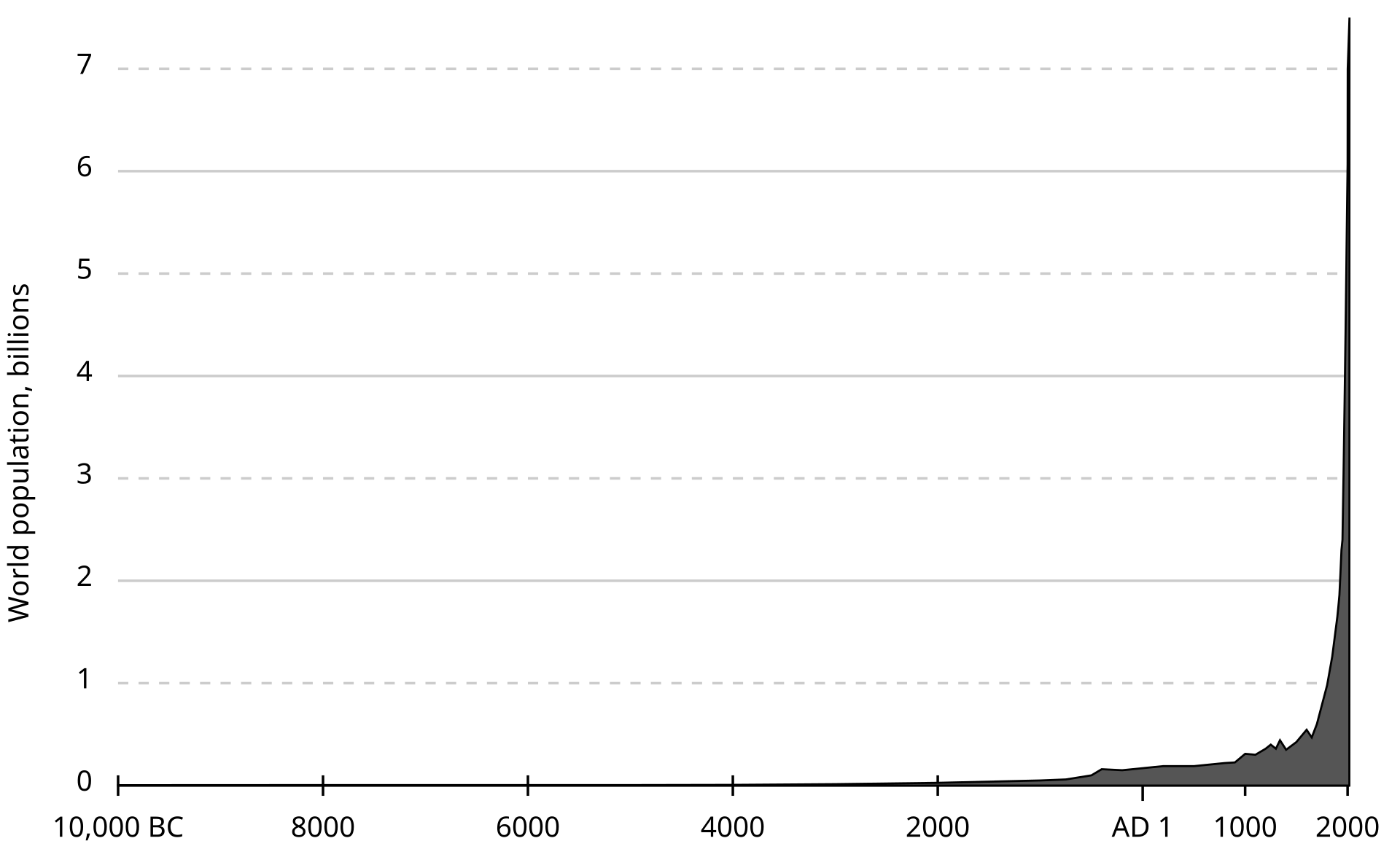
Knowing the gift we inherited, if we were rational, we would meticulously conserve the hoard. We would maximize efficiency to stretch our luck across millennia. We chose the opposite approach and devoured the windfall in a handful of generations by expanding the population far beyond sustainable limits and finding novel ways of expending energy. Indeed, most of the “innovations” of the 20th and 21st century were simply new ways of using fossil fuels.
Our tendency to spend rather than conserve efficiencies has a name: Jevons paradox. In 1865, English economist William Stanley Jevons watched the British empire replace the clunky Newcomen steam engine with the highly efficient James Watt model. Logic dictated that a society using a more efficient engine would consume less coal. Jevons observed the exact inverse: aggregate coal consumption skyrocketed.
The Jevons Paradox explains that technological efficiency fundamentally lowers the cost of exploiting a resource, creating new demand. We use it to build larger, more complex infrastructures. We spend the savings immediately to expand the empire.
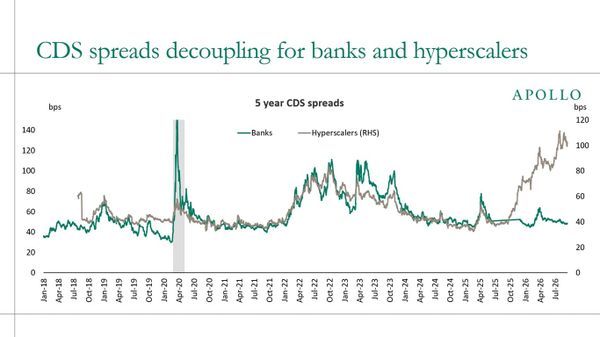
This compulsion haunts the present day, manifesting most aggressively in the runaway, unregulated fever dream of Artificial Intelligence. Technocrats initially promised that the sheer computational efficiency of specialized AI chips would flatten the tech sector’s energy demands. By 2026, this promise evaporated. Massive tech companies built enormous facilities, doubling global data center usage in just a few years.
We did not use our supreme computational efficiency to shrink our footprint or secure our civilizational longevity. We used it to accelerate our sprint toward the biophysical wall.
Our arrogant sprint relies on a historical amnesia. The modern mind, crippled by recency bias, views two hundred years of exponential growth as the standard of human existence. A 200-year back-test sounds convincing to many, but in reality it is no time at all. Especially against the geological realities of fossil fuels. If the 4.5-billion-year history of the Earth were compressed into a twenty-four-hour clock, the industrial era occupies a mere fraction of a second just before midnight. To base our species' permanent operating model on a 250-year geological anomaly is an act of supreme ignorance.
History teems with the ruins of civilizations that believed they were immune to the laws of nature. Complex societies are inherently fragile. Anthropologist Joseph Tainter explained how this collapse happens. When a society faces pressure (like a damaged environment or too many people) it tries to solve the problem by making its systems more complicated. It creates new government departments, breaks jobs down into highly specialized roles, and pours money into new technology. At first, this works. But keeping all these complicated systems running requires a massive, constantly growing supply of energy.
Eventually, the civilization exhausts its cheap solutions and hits the wall of diminishing marginal returns. We see this today in the plummeting Energy Return on Energy Investment (EROEI). A century ago, drilling a shallow well in Texas gave us a hundred barrels of oil for every one barrel of energy we spent. Today, we have to fracture deep rock with chemicals or drill miles under the ocean just to get what's left. The return on our investment has plummeted. We are spending massive amounts of money and energy just to keep the current global system running.
When the cost of maintaining the status quo eclipses the benefits, the society becomes hyper-fragile. A pandemic, a drought, or a shattered supply chain acts as the final gust of wind against a rotting edifice. Collapse, Tainter argues, is merely a rational, mathematical adjustment to a lower, sustainable level of complexity.
We think we have defeated nature, but merely the game of civilization has gone into overtime.
The obsession with perpetual, compounding GDP growth on a physically finite planet represents a catastrophic detachment from reality.
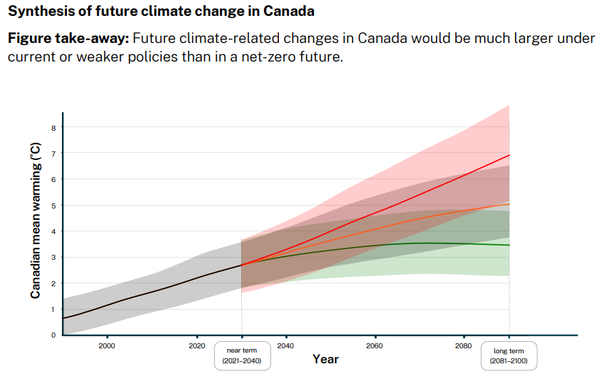
The bill is already arriving. Entering 2026, the scientific consensus confirms we have breached seven of the nine planetary boundaries that maintain the stability of the Earth system. We have profoundly destabilized the climate, initiated the sixth mass extinction, and corrupted our freshwater systems. Most terrifyingly, we have officially transgressed the Ocean Acidification boundary. The ocean has absorbed so much carbon dioxide that it is becoming too acidic for basic life. This acid literally dissolves the shells of the tiny creatures that form the base of the marine food chain. If these foundational organisms die, the entire ocean ecosystem collapses. Furthermore, this chemical shift cripples the ocean's ability to absorb the earth's excess heat. This is the most terrifying breach because it simultaneously destroys a massive global food supply and breaks the planet's primary cooling system.
With what's laid before us, it's clear that Malthus wasn’t wrong. He was just early.
The carbon pulse that fueled our delusion is fading, and the iron laws of ecology are reasserting their dominance. To pretend that a technological savior, whether artificial intelligence, nuclear fusion, or even renewables, will intervene is ignorant hubris. We cannot engineer our way out of thermodynamics. There is no top-down fix for a species in severe ecological overshoot.
The macro-level collapse of our complex systems is underway. Clinging to false hope or demanding that dying institutions somehow reverse the tide is a waste of remaining time and energy.
The only rational response is to turn inward and localize. As the global machinery fractures, survival will depend entirely on your immediate physical reality. Prioritize what is tangible. Learn to grow food in depleted soil. Build deeply rooted local communities that can share burdens when international supply chains inevitably fail. Develop hard, practical skills that retain value in a low-energy environment.
The era of the carbon pulse was a brief, dazzling anomaly. The party is over. We are returning to the historical baseline. Navigating the wreckage requires abandoning the arrogance of the last two centuries and preparing for the descent.
Thank you for reading.
My name is Sarah and I run Collapse2050 by myself. It is a passion project to explore humanity's frightening future - a topic traditional media ignores.
The site is free for all, as I believe this information shouldn't be locked behind a paywall. I also don't accept corporate advertising so I remain totally free to tear the kleptocracy a new one.
To fund this site, I depend on the kindness of strangers. Paid subscribers and one-time contributors to help me cover research and production costs.
Thank you.
Sarah