Why we're blind to civilizational collapse
And why when we do see it, we fail to act.


A boundary exists between what can be measured and what can only be feared.
Quantifiable risk belongs to the casino, the mortality table, and the actuarial ledger. It describes a world where the outcome of an event is unknown, but historical data exists to support a probability estimate. Because the boundaries of the system are fixed, we can use historical data to calculate numerical odds.
Knightian uncertainty, by contrast, considers the unprecedented. It arises when a situation, like climate change, is so novel or complex that history offers no guide. We are pushing the biosphere far outside its Holocene baseline, entering an environment where the variables themselves are changing, and the models used to project future outcomes break down.
Even where data exists, it frequently misleads because risk models conflate volatility with permanent loss. Volatility is the temporary, noisy swinging of a pendulum around a stable center. It operates within an ergodic framework, meaning that over time, the average of a system's fluctuations will mirror what we expect across the entire space. In plain terms, volatility is survivable. The market dips, then it recovers. The weather fluctuates, but the seasons return.
Permanent loss is the crossing of what mathematicians call an absorbing barrier. It is a threshold from which no return is possible. For a business, this barrier is bankruptcy; for an individual, it is death; for a civilization, it is collapse.
Permanent loss is more common than most tbink. In fact, path dependency dictates that if a strategy or action exposes a system to an event with a non-zero chance of total destruction, the probability of collapse approaches 100% over time.
Because you cannot recover from ruin, conventional risk management, which seeks to balance potential hazards against prospective rewards, is useless. Volatility can be managed through diversification and hedging. Systemic ruin, however, requires the strict enforcement of the Precautionary Principle. The Precautionary Principle demands that we halt any action carrying a non-zero chance of premanent loss, such as civilizational destruction, regardless of how small the estimated probability appears or how lucrative the short-term rewards of the action might be.
We miss the fat tails
The fallible belief in quantitative analysis fuels the delusion that we can manage existential risks.
One tool for measuring market exposure is the Value at Risk model. VaR calculates the maximum potential loss a portfolio might face over a specific window at a given confidence level, usually the 99th percentile.
VaR works well enough for predicting regular, day-to-day changes when markets behave normally and fluctuations are normally distributed around the mean. But it fails during the rare, catastrophic shifts that live in the extreme tails of a probability distribution curve. This vulnerability stems from a reliance on Gaussian bell curves, which treat variations as independent, mild fluctuations around a stable mean. A Gaussian framework dismisses extreme outliers as statistically impossible within the lifespan of the universe.
In the real world, extreme events occur with regularity and carry devastating consequences.
The collapse of the hedge fund Long-Term Capital Management in the late summer of 1998 revealed the fragility of these quantitative assumptions. Directed by a team that included Nobel laureates, LTCM used strategies driven by complex mathematical models. On a capital base of three billion dollars, the fund borrowed enough to control over one hundred billion dollars in assets, while holding derivative positions worth more than one trillion dollars.
LTCM’s models indicated that a 45 percent drop in its equity value in a single month was a ten-sigma event, an occurrence so remote it should never happen. Yet, when the Russian government defaulted on its domestic debt that August, global liquidity dried up, and historical asset correlations rapidly changed. The ten-sigma outlier appeared instantly, destroying the fund's equity and forcing the Federal Reserve Bank of New York to engineer a multi-billion-dollar bailout to safeguard the global financial system.
A decade later, global financial companies repeated the error during the subprime mortgage crisis. Wall Street operated on the assumption that default risks across different regional housing markets were unconnected. Just five months before the subprime network collapsed, the International Monetary Fund declared that global economic risks had minimized. Only a handful of economists anticipated the crash, which created an existential risk to the financial system and global economy.
These failures stem from professional hubris: the belief that quantitative models coupled with human ingenuity can predict and tame rare, low-probability events. Some practitioners, aware of these failures, even argue that predicting outcomes that result in permanent loss is beyond the scope of their role!?!
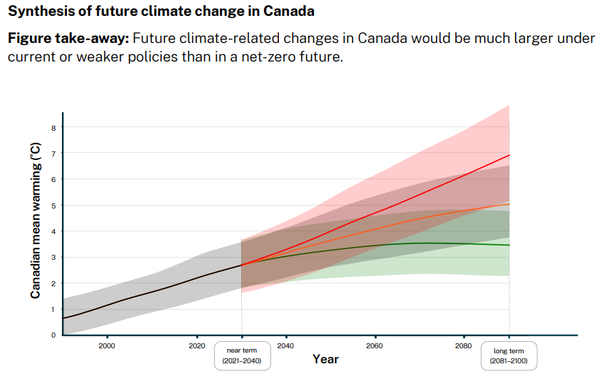
When global institutions apply this same logic to climate change, the forecast is similarly primed for catastrophic failure. For example, sophisticated models may attempt to calculate an "optimal" level of global warming, bizarrely suggesting that three degrees Celsius of warming is acceptable, by discounting the linearly-estimated future costs of environmental damage against the immediate expense of cutting emissions.
This "optimization" creates a specific payoff structure, sometimes called a Taleb distribution. It delivers steady, positive returns for a long time, punctuated by a small but real risk of total annihilation. The strategy resembles tailgating on a highway. A driver can save a few seconds on every trip by following too closely, enjoying a string of small gains, until a sudden stop causes a fatal collision.
The overreliance on flawed mathematical models built on historical data is ultimately a failure of imagination. Unfortunately, within the institutional world, even those with the imagination to see the possibilities don't have the opportunity to share their views. Such claims, especially given their gravity, require evidence that can be succinctly captured on a PowerPoint slide, explained in a soundbite. To humanity's detriment, most political and business decision-makers, and their constituents, equate complicated science to modern soothsaying.
Trapped by our cognitive biases
Our inability to prepare for long-term ecological catastrophe is partly a consequence of our evolutionary biology. The human brain evolved in small-scale, immediate environments, leaving us with cognitive biases that struggle to process slow, abstract, systemic threats.
We suffer from an optimism bias that leads us to underestimate our chances of experiencing negative events while overestimating favorable outcomes. We combine this with a recency bias, over-weighting our lived experience of stable weather patterns while ignoring historical or geological baselines of abrupt climate shifts. These tendencies harden into status quo extrapolation, the default assumption that current environmental and economic conditions will continue indefinitely.
Many cognitive deficits are rooted in how the brain processes time. Under the future-self-continuity model, choices involving time are processed as conflicts between different versions of ourselves. Neuro-imaging studies show that the rostral anterior cingulate cortex, which lights up during self-referential thought, is quiet when we think about our future self. In other words, when you imagine your own life twenty years from now, your brain activates the same neural patterns it uses when thinking about a complete stranger. Because we perceive our future self as a stranger, we struggle to feel empathy for our long-term needs. We collectively choose today's consumption instead, preferring the immediate benefits of cheap energy over the survival of our future society.
Everyday safety choices expose this internal myopia, like riding a bicycle without a helmet. A cyclist routinely relies on optimism bias, recalling years of accident-free riding, to prioritize immediate comfort over the abstract risk of head trauma. Moreover, they can't empathize with their future self who, after an accident causing a traumatic brain injury, regrets not simply donning a helmet.
Interestingly, safety measures can introduce new risks. A driver wearing a seatbelt may drive faster; a motorist may pass a helmeted cyclist with a narrower safety margin because they assume the cyclist is protected.
Localized, linear interventions often fail because they ignore the adaptive, non-linear reactions of human psychology. This is seen at scale when even genuine attempts at "green consumerism" fail to reduce total planetary emissions. In a parallel to Jevons Paradox, added safety measures often result in greater risk-taking.
Instead of managing risk, we solve problems
Societies scale up institutional complexity to solve problems in a similar counterproductive way individuals rely on localized safety interventions.
Humans individually and collectively are problem solvers. Anthropologist Joseph Tainter found that when faced with new stresses, societies tend to scale up their sociopolitical complexity.
Examples of complexity include things like hyper-specialization of labor, web-like supply chains, large administrative bureaucracies, and increased investment in niche technological research.
Tainter’s core insight is that investment in complexity is subject to the law of diminishing marginal returns. When a society encounters problems, it naturally claims the easiest solutions first. This is at the core of civilization's failure to address long-term existential risks.
Over time, resolving subsequent difficulties requires exponentially greater energy, capital, and administrative overhead for smaller incremental gains. Early scientific breakthroughs were made by individuals with modest equipment; modern physics requires multi-billion-dollar particle accelerators to achieve incremental progress.
Societies are locked into this escalatory spiral. When a state introduces taxes or regulations to manage its affairs, interest groups find loopholes. Instead of simplifying the tax codes, the state adds new layers of rules, enforcement divisions, and compliance structures to patch the gaps. This creates a self-reinforcing loop that inflates the administrative overhead of the entire society.
To maintain authority, a state must continuously deliver benefits and security to its population. Over time, these services harden into permanent entitlements. The state cannot withdraw them without losing its legitimacy and risking internal unrest. Consequently, governments must maintain these costly operations even when the underlying resource base yields diminishing returns.
As climate change accelerates, it acts as a massive, multiplying tax on this entire apparatus. Extreme weather destroys infrastructure faster than it can be replaced; crop failures demand emergency subsidies; floods require defensive engineering.
By not anticipating and mitigating risks, the state is forced to invest exponentially more energy and capital to patch its complexity. It must remediate immediate crises simply to keep everything from falling apart.
Eventually, the marginal return on complexity turns negative. At this point, a civilization consumes its accumulated surpluses merely to cover daily operating expenses and climate damages. It retains no reserve capacity to absorb unexpected shocks and complexity rapidly shrinks. Simply put, society's natural near-sighted inclination to solve immediate problems by layering complexity eventually causes its own implosion as ignored long-term risks begin to materialize.
"When the music plays you have to dance"
The ultimate barrier to global climate coordination is the multipolar trap, a game theory scenario where self-interested actors are forced by competition to act against their collective best interests.
Individual rationality produces collective ruin. In systems analysis, this pattern is often called the tragedy of the commons, or the prisoner's dilemma scaled to many players.
Competing actors, whether corporations or nation-states, exist in a world where restraint, emissions reductions, and long-term stewardship carry an immediate competitive penalty. A country that freezes its industrial output or voluntarily reduces its fossil fuel consumption will see its economic power and security diminish relative to its rivals.
The system functions like an autonomous machine. Participants may foresee and despise the collective trajectory, yet no single actor possesses the coordination capacity to halt it without committing strategic suicide. This exact scenario occurred leading up to the global financial crisis. In 2007, Chuck Prince, former CEO of Citigroup, famously said "when the music plays you have to dance." He was referring to the competitive pressures to continue lending and investing, despite the increasingly obvious risk to banks. As long as the party continued, bank executives had to participate, or risk losing share to competitors and getting fired by shareholders prioritizing quarterly earnings. A year later, the financial system imploded, asset values tanked, and remaining liabilities were socialized by the state.
The Hyperobject
Philosopher Timothy Morton coined the term hyperobject to explain why humans cannot grasp existential risk. He defines it as something so massively distributed across time and space that it defies human comprehension. Climate change is a hyperobject.
Hyperobjects possess a quality Morton calls viscosity; they are sticky, eliminating any comfortable aesthetic or intellectual distance. We are fully inside the phenomenon. Every attempt to distance ourselves from it only confirms our entanglement.
Hyperobjects occupy a higher-dimensional space than human senses can directly perceive. We only ever see three-dimensional slices of the system (a local drought, a severe wildfire, a melting glacier) while the hyperobject itself remains an abstract phenomenon beyond our direct sight.
We know ordinary actions, such as starting an engine, are directly linked to the slow-motion degradation of the biosphere. But we lean on our cognitive biases to comfort ourselves that the environment is a stable, distant background that will eventually balance itself.
We all fall down
Because the climate is a hyperobject, its destruction proceeds as a web of simultaneous physical, economic, and institutional feedback loops that outrun human adaptive capacity.
When rising greenhouse gas emissions trigger concurrent breadbasket failures, the strain hits global food supply chains instantly. This spike in staple prices creates immediate domestic political instability, driving uncontrolled migration pressures. The resulting influx of refugees triggers political radicalization within receiving nations, fracturing the very multilateral institutions required to coordinate the next climate response.
Concurrently, a secondary loop hollows out state capacity. As extreme weather events compound, the state must allocate its dwindling energy and capital surpluses entirely to reactive infrastructure repair, emergency subsidies, and border control. This leaves zero reserve capacity.
The system enters a phase of cascading synchronous failure. Physical shocks degrade institutional stability, while institutional paralysis accelerates resource depletion.
Civilization is finally crushed under the weight of interconnected, self-reinforcing stressors that erode the structural complexity keeping it upright.
Thank you for reading.
I'm Sarah Connor and I'm here to share the horrifying truth about the future.
This site is reader-supported. That means no ads or corporate sponsors, allowing me to say whatever needs to be said.
To fund this site, I depend on the kindness of readers. If you can, please consider a paid subscribers or one-time contribution to help me cover research and production costs.
Thank you.
Sarah