Humanity is about to conduct a dangerous experiment on the planet
Geoengineering is humanity’s Hail Mary attempt to maintain business as usual

As the grand finale for civilization approaches, what was once a fringe idea is rapidly becoming reality. And startups are already scrambling to make billions off our desperation.
Stardust Solutions is an Israeli-American startup that recently emerged from the shadows with its plans to geoengineer the planet's atmosphere to shade the sun, cooling the planet. Led by veterans of Israel’s atomic energy sector and backed by $75 million in venture capital, the company plans to monetize geoengineering.
To understand what Stardust is doing, one must understand albedo, or how much sunlight a surface reflects. A white T-shirt has a high albedo; a black asphalt road has a low one. By increasing the Earth’s albedo, we can reflect a tiny fraction of the sun’s energy back into space before it heats the ground.
Stratospheric Aerosol Injection (SAI) of extremely small reflective particles can do this, mimicking the effects of a volcano. (When Mount Pinatubo erupted in 1991, it spat millions of tons of sulfur into the upper atmosphere. For the next year, global temperatures dropped by about 0.5C.)
To create a lasting shield, Stardust send these particles into the stratosphere, roughly 18 kilometers up. This is nearly double the altitude of a standard commercial flight.
The delivery requires a specialized fleet of high-altitude aircraft designed to operate in the thin, stable air above the clouds. Because there is no rain in the stratosphere to wash the particles away, they can stay suspended for one to two years. Once released, a natural atmospheric conveyor belt known as the Brewer-Dobson circulation slowly spreads the particles around the entire globe.
Stardust Solutions plans to use engineered amorphous silica (non-crystalline sand) and calcium carbonate. These particles are 125 times smaller than a grain of sand. The company hopes these particles will be safe and efficient, though they kept the formula secret behind non-disclosure agreements until very recently.
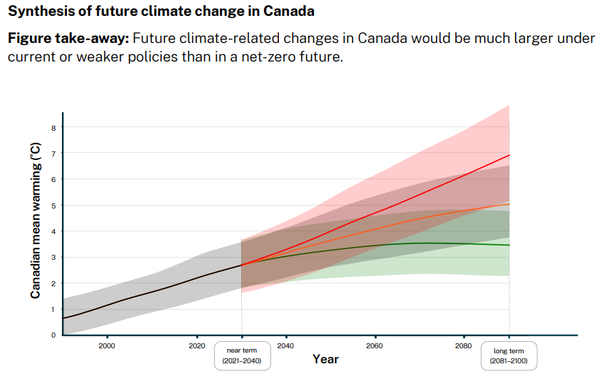
Geoengineering is humanity’s Hail Mary pass, a controversial last-ditch attempt to save civilization from itself. Despite the risks, factions of government, science, and business increasingly see geoengineering as inevitable. This shift in thinking is driven by data showing the planet is warming faster than ever, with SAI providing a "get out of jail free card" permitting industry to continue spewing greenhouse emissions. Call it an appeasement strategy supporting business as usual for the oligarchs.
The prospect of dimming the sun introduces risks as large as the problem it tries to solve. The potential for catastrophic human error is immense.
The biggest risk is termination shock. Because these particles only stay in the sky temporarily, they must be constantly replenished. Forever. If a war, a pandemic, or a financial collapse caused the spraying to stop abruptly, the masked warming would come blasting back. Global temperatures could rapidly spike by a few to several degrees, a shock so big and fast that most life would end.
Humanity lacks compassion for future generations so this risk probably won't change anyone's mind, but on a planet with finite resources shooting dust 18km into the sky isn't something we can do in perpetuity. This would near guarantee our eventual extinction once the program ends.
There is also the free-driver problem. Unlike switching the world to green energy (putting aside for now the question whether green energy is a red herring), which costs trillions, or cutting energy use, which costs trillions in reduced economic output, spraying the sky is pretty cheap. Perhaps only $2 billion to $10 billion a year.
Anyone with a few billion dollars in spare change could attempt this without anyone else’s permission. A lone decision would undoubtedly trigger unintended (or perhaps intended) consequences, since "air molecules do not carry passports," as astrophysicist Neil deGrasse Tyson notes. A lone wolf's decision to cool one country could cause a catastrophic drought in another, potentially sparking conflict.
Finally, there is the risk of over-shading. By its very design, stratospheric aerosol injection reduces incoming solar radiation, scattering direct sunbeams and turning them into diffuse light. This creates a dangerous, counterproductive paradox. While the planet might cool, the lack of direct sunlight could severely depress global crop yields and weaken the summer monsoons in Asia and Africa, potentially sparking catastrophic droughts for billions of people. Furthermore, this diffuse light degrades the efficiency of solar panels. We risk creating a world that is artificially cooler, yet ironically more reliant on the very fossil fuels that caused the crisis.
Currently, there are no real laws stopping Stardust Solutions or some billionaire from trying this. Stardust has released its own research outlining safety rules, but this may be performative governance…a way to create the perception of safety to shape public opinion while keeping the core technology private. A clear conflict of interest to amplify a technocrat's wet dreams.
Meanwhile, hundreds of scientists are calling for an international Non-Use Agreement, but money is moving faster than international law. If we do not create a global democratic framework soon, the fate of the sky (and the planet) will be decided the first person with enough money and hubris to launch the planes.
Thank you for reading.
My name is Sarah and I run Collapse2050 by myself. It is a passion project to explore humanity's frightening future - a topic traditional media ignores.
The site is free for all, as I believe this information shouldn't be locked behind a paywall. I also don't accept corporate advertising so my articles remain unbiased.
Paid subscribers and one-time contributors to help me cover research and production costs.
Thank you.
Sarah