The AI Bust and What it Means for You
Live to fight another day


I often think of Collapse2050 as a risk management blog, designed to help readers see around corners. My aim is to help people understand the big risks. Sometimes that includes economic risks. The ones that send the average non-billionaire scrambling, if caught unprepared.
Bubbles and busts are human nature. Markets are intoxicated by new ideas and innovations, especially if it provides a means to get rich. I’ll put aside the scams and totally irrational bubbles, like Dutch tulip bulbs. There are plenty of rational bubbles to go around. The railway, telecommunications…and now AI. All premised on something groundbreaking. All ended (or will end) in tears.
This is not an investing blog, but an implosion of the AI bubble could cause an aggregate slowdown that hits people whether they invest or not. A collapse in the value of assets held in portfolios has a ripple effect on employment. Landing a job today already requires a minor miracle. It would get much more difficult if companies start shrinking.
Worse, increasingly, portfolios held by institutional investors, such as insurance companies and pensions, hold private debt and equity issued by AI companies. A collapse in the value of AI-related assets could leave a gaping hole in these entities, requiring either a cut in payouts or a government bailout. Either way, you pay.
One can view savings and investments as the quantitative cumulative net value of one’s lifetime of work. Yeah, it’s crude but when I think of it that way it reminds me of the effort it took to obtain it. Every dollar I have saved required blood, sweat and tears at a job that tried to destroy me. I am too old to go through that again, so I’m protective of whatever I have.
For this reason I am always looking for the next 2000 or 2008 or 2020, all of which featured double-digit declines in stock indices. An AI implosion could be the next one.
Railroads and internet telecommunications proved themselves as valuable over the long run. Yet both suffered from overinvestment driven by hype. When the reality of ROI clashed with investor expectations, capital fled and asset prices collapsed. The infrastructure remained, however, for another day.
AI is following this pattern. If you look beyond the public-facing LLMs, agentic AI models are both theoretically transformative and practically infeasible. Today, I’d argue they’re more dangerous than useful, but in theory some company in the future might find a way to implement to improve ROI. That’s what investors are banking on, but patience is waning as the confetti settles and reality appears dull.
People like Ed Zitron have been pounding the table for a few years now arguing the AI “revolution” is all hype, but his prognostications were far too early to be pragmatic for most investors. Today, however, data increasingly show the results aren’t aligning to expectations.
Below are a few charts that illustrate the state of the AI bubble:
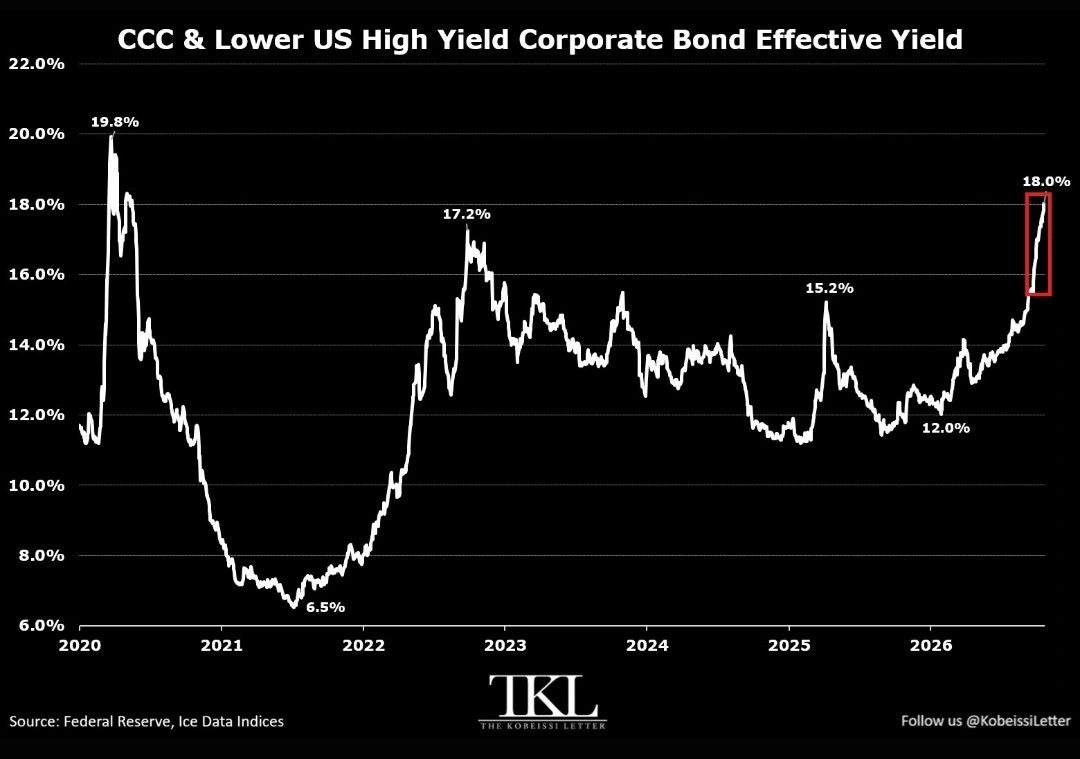
Junk bonds are under severe pressure, increasingly pricing in defaults for higher-risk credits. This includes highly speculative debt funding the AI buildout.
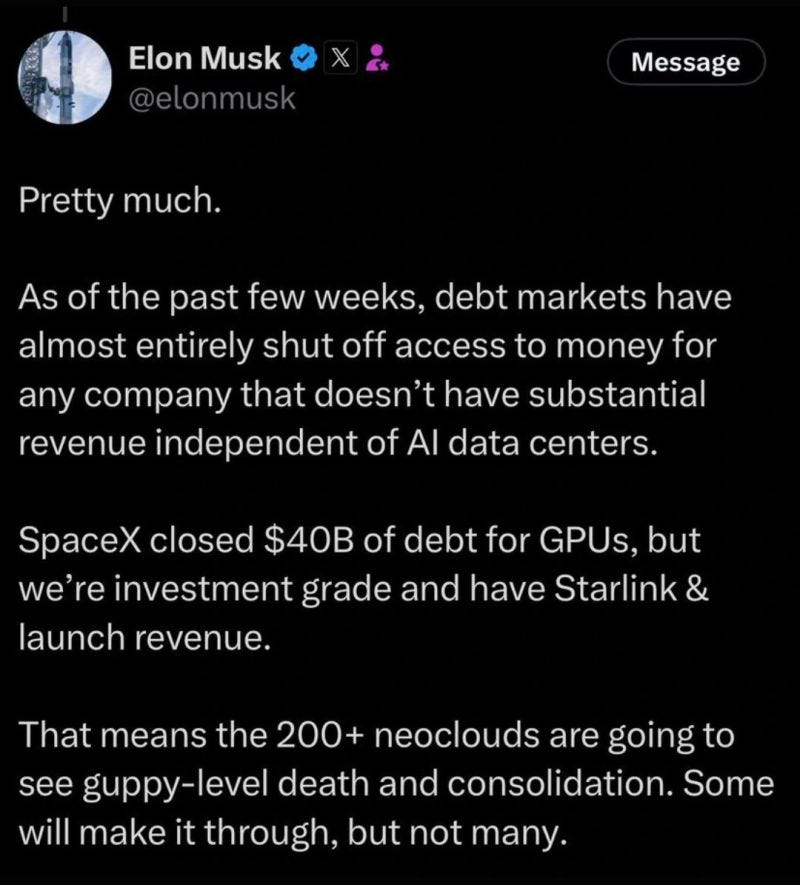
I hate to quote Musk, but if true this is a valuable insight. It does make intuitive sense, especially given the corroborating data points.
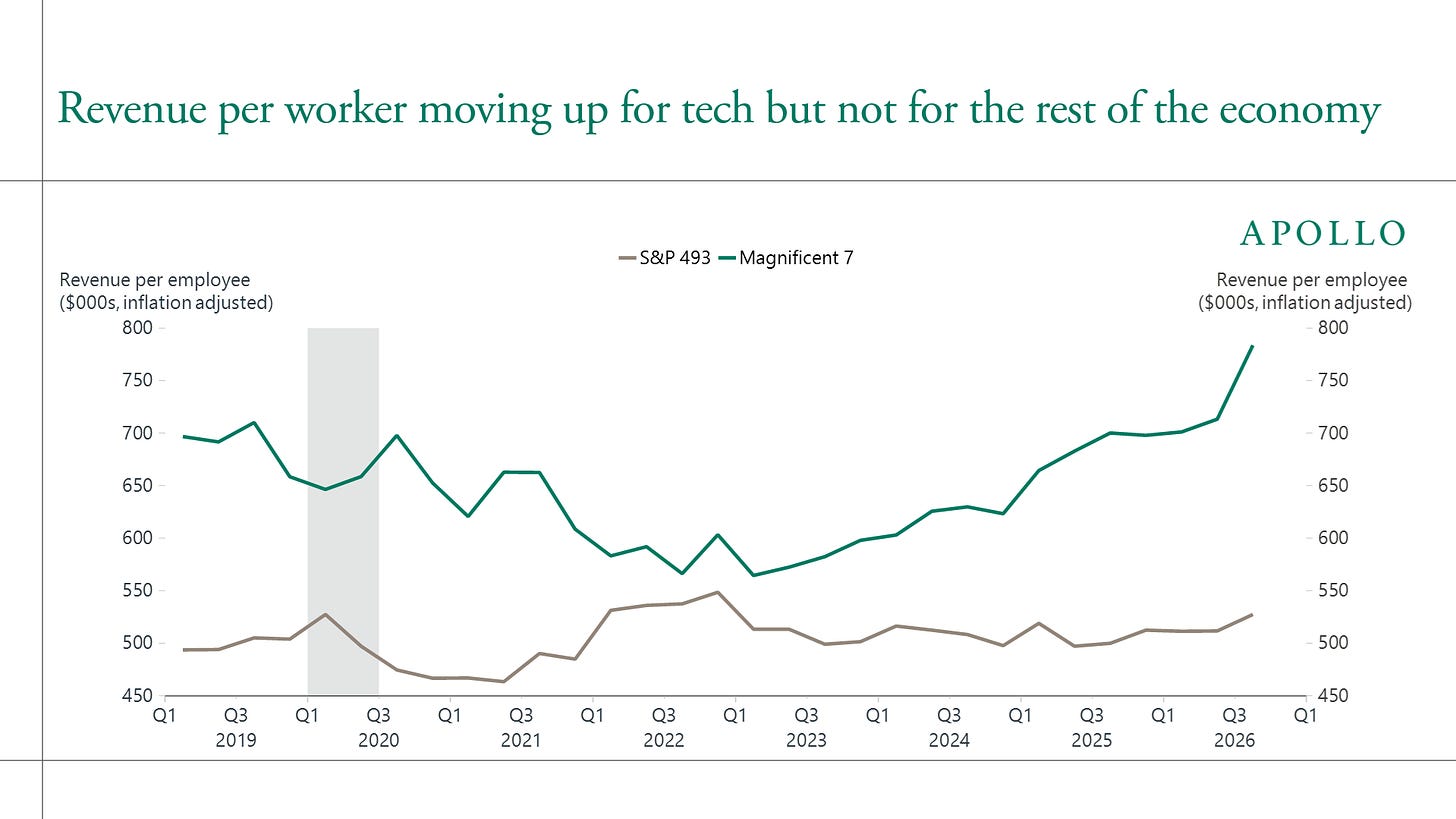
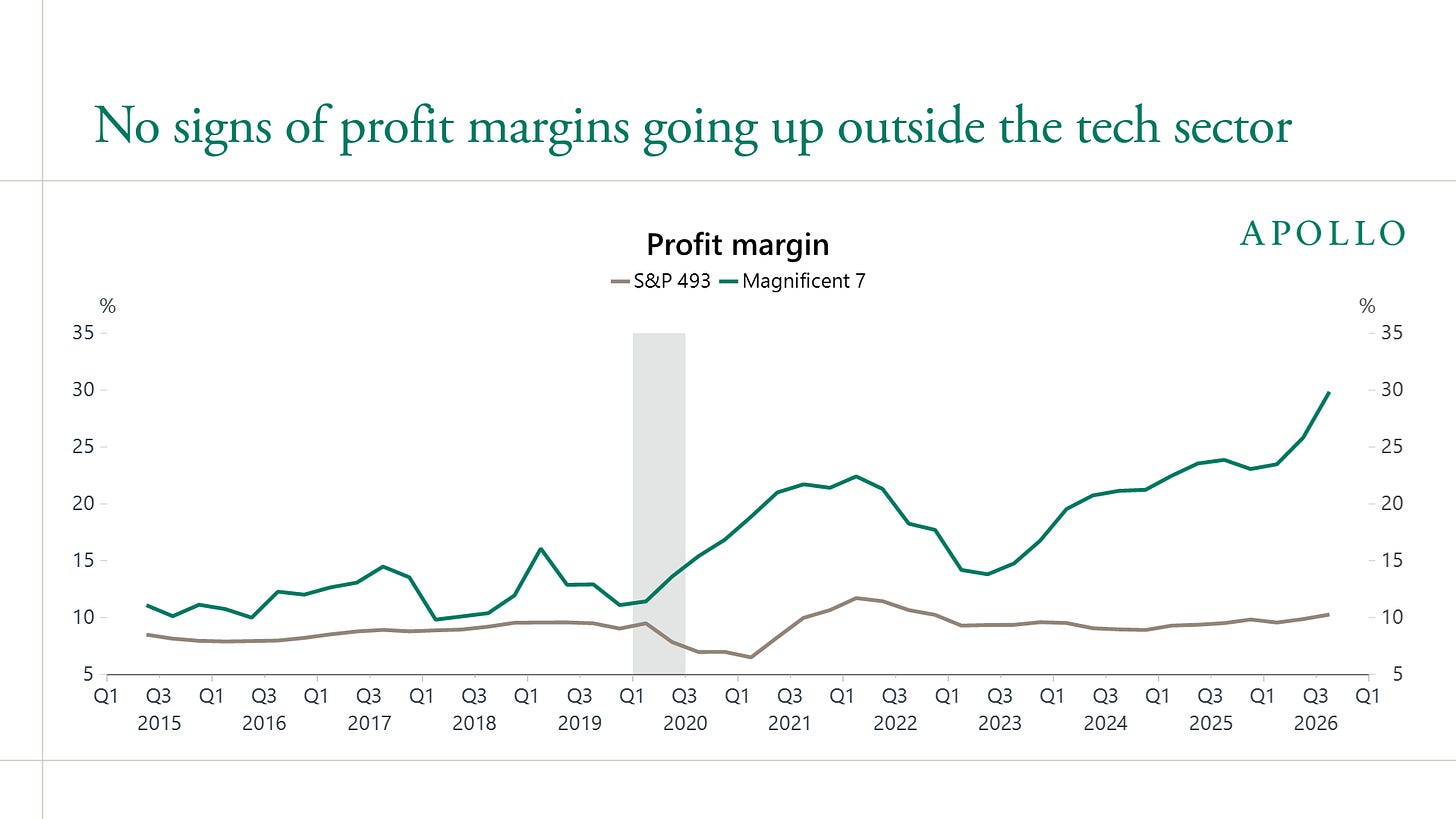
The only companies benefiting from the boom in AI investment are companies selling picks and shovels. Outside of the Mag-7, revenue per employee (a measure of productivity) and profit margins are flat.
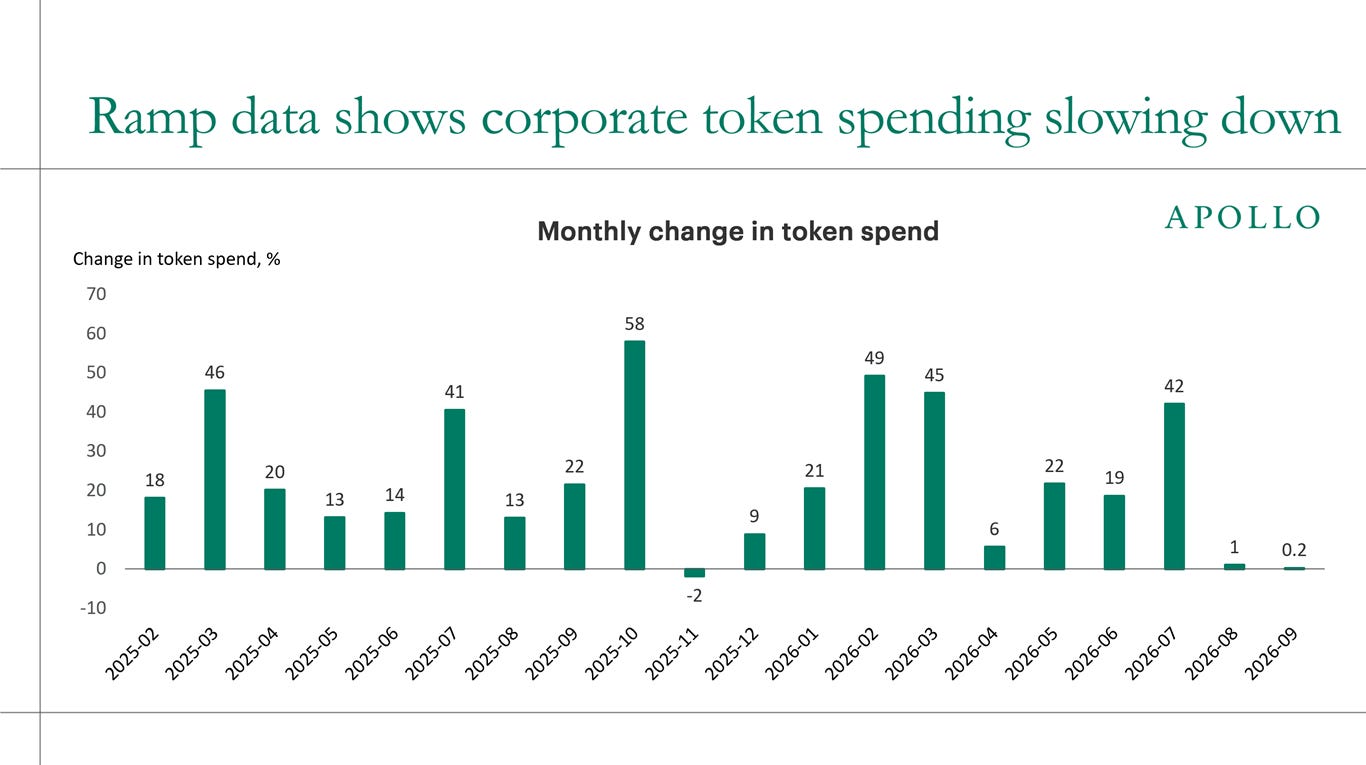
Companies are becoming more cost-aware of their AI spending. For two months token usage has remained flat.
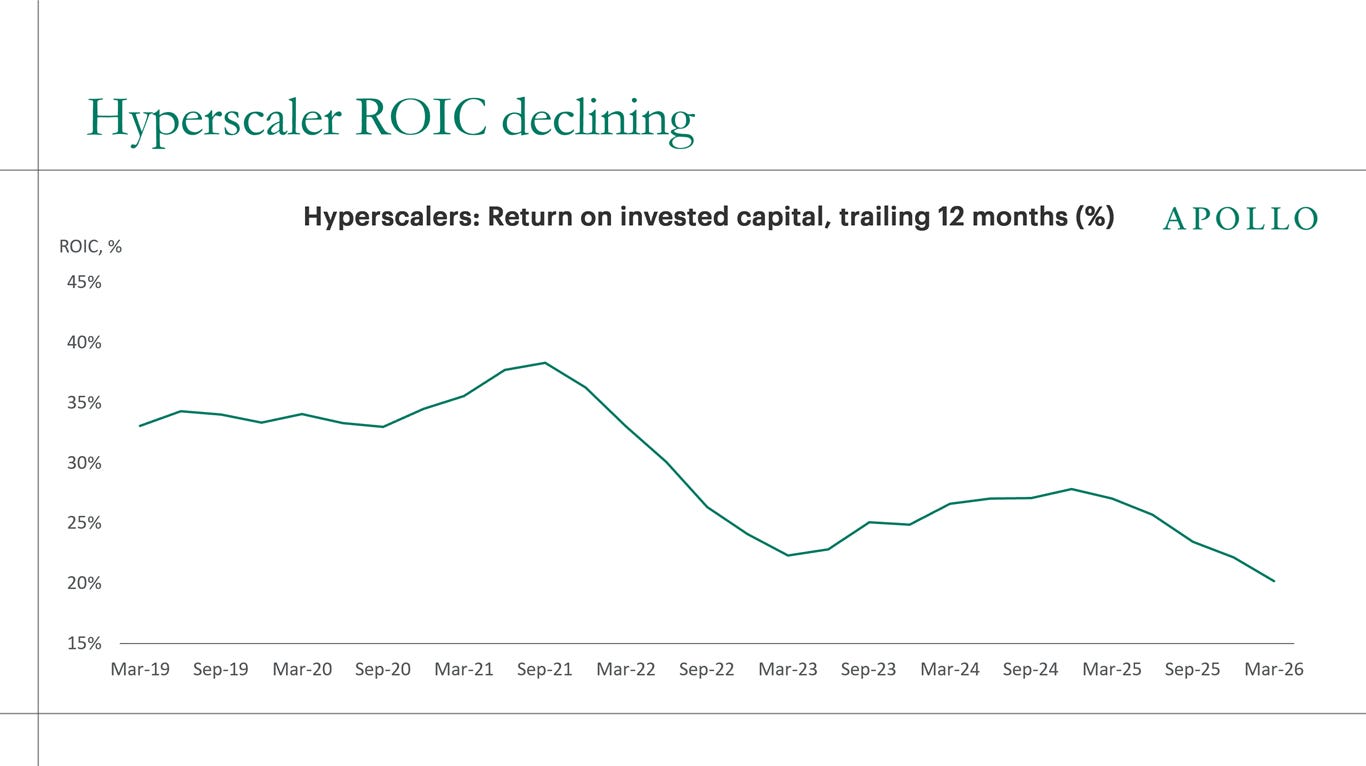
Users would be spending more if the ROI was there. Despite the hype, ROI is trending in the wrong direction.
Two opposing realities can be true simultaneously
“The Skynet Funding Bill is passed. The system goes on-line August 4th, 1997. Human decisions are removed from strategic defense. Skynet begins to learn at a geometric rate. It becomes self-aware at 2:14 a.m. Eastern time, August 29th. In a panic, they try to pull the plug.” - Cyberdyne Systems Model 101
Friends of Collapse2050 who have read previous posts might point out that I’m arguing that AI is both uneconomic and destructive. Yes, that is what I’m saying. AI is both unpragmatic for businesses (at least currently) yet is becoming powerful enough to hack civilization’s feeding tubes.
Given that premise, even if capital for datacenters and associated accoutrements evaporates, private companies collapse, and asset prices crash, governments will step in with strategic funding to keep their latest weapon alive.
It could all blow up and still still exist at the same time. Much like how Pets.com died in November 2000 along with many other internet companies valued on eyeballs and clicks, yet the internet and ecommerce remained to develop and overwhelm bricks-and-mortar retail. The internet collapse didn’t stop Amazon from becoming the piss-in-a-bottle company we all despise today.
OK, so what the hell am I trying to say?
Good question.
Over the long-run (3yrs? 5yrs? 20yrs?) we might be sent to the spice mines of Kessel and smashed into who knows what, but that doesn’t mean we should ignore what’s right in front of us. The point is to live to fight another day. That means preserving what you have so you can continue to acquire the tools and develop the skills needed for survival. Of course, there are some who might lie down and submit to the whims of what’s occurring around them, but I believe we have a moral and practical duty to fight every step of the way.
That means we look around corners, sometimes predicting things that don’t happen. Or take longer to happen. And have a plan for if they happen.
While logic might suggest the AI economics is broken, if/when/how the sector crumbles is anyone’s guess. Moreover, the secondary and tertiary impacts are partially random. This is where imagination must fill in the gaps.
Before turning the corner, one must attempt to understand a) how exposed they are, b) how much downside they can handle, and c) what they will do when they experience that downside.
These are not easy questions to answer as emotions can take control during the economic wildfire. But this is what you must consider while you have the mind space to do so.
None of my content is behind a paywall because I want it available to all. However, paid subscriptions help support my research and writing.
If you find this article interesting or helpful, you can also support without committing to subscription by making a one-time contribution.